Juxtaposition Rug
DESIGN DESCRIPTION
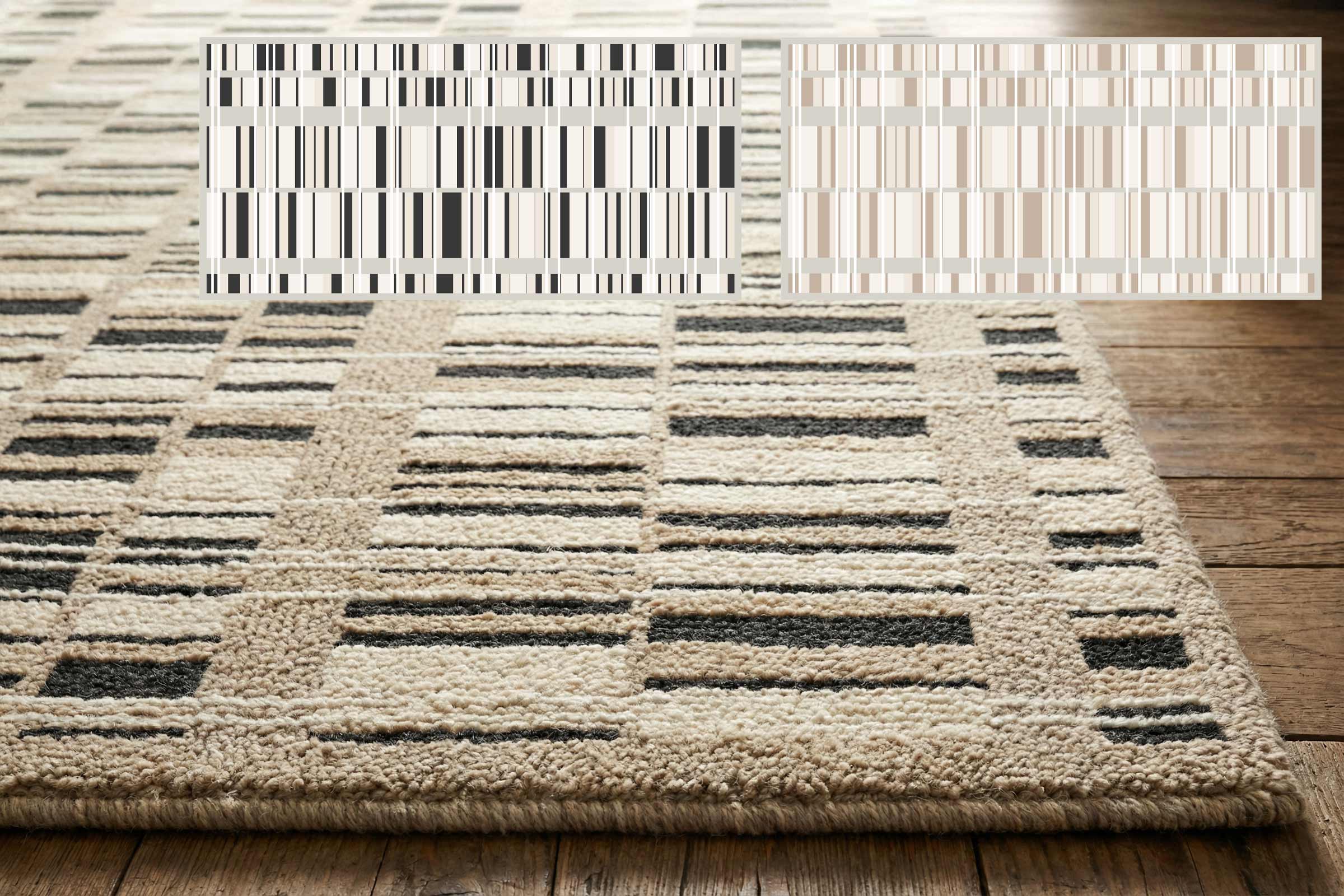
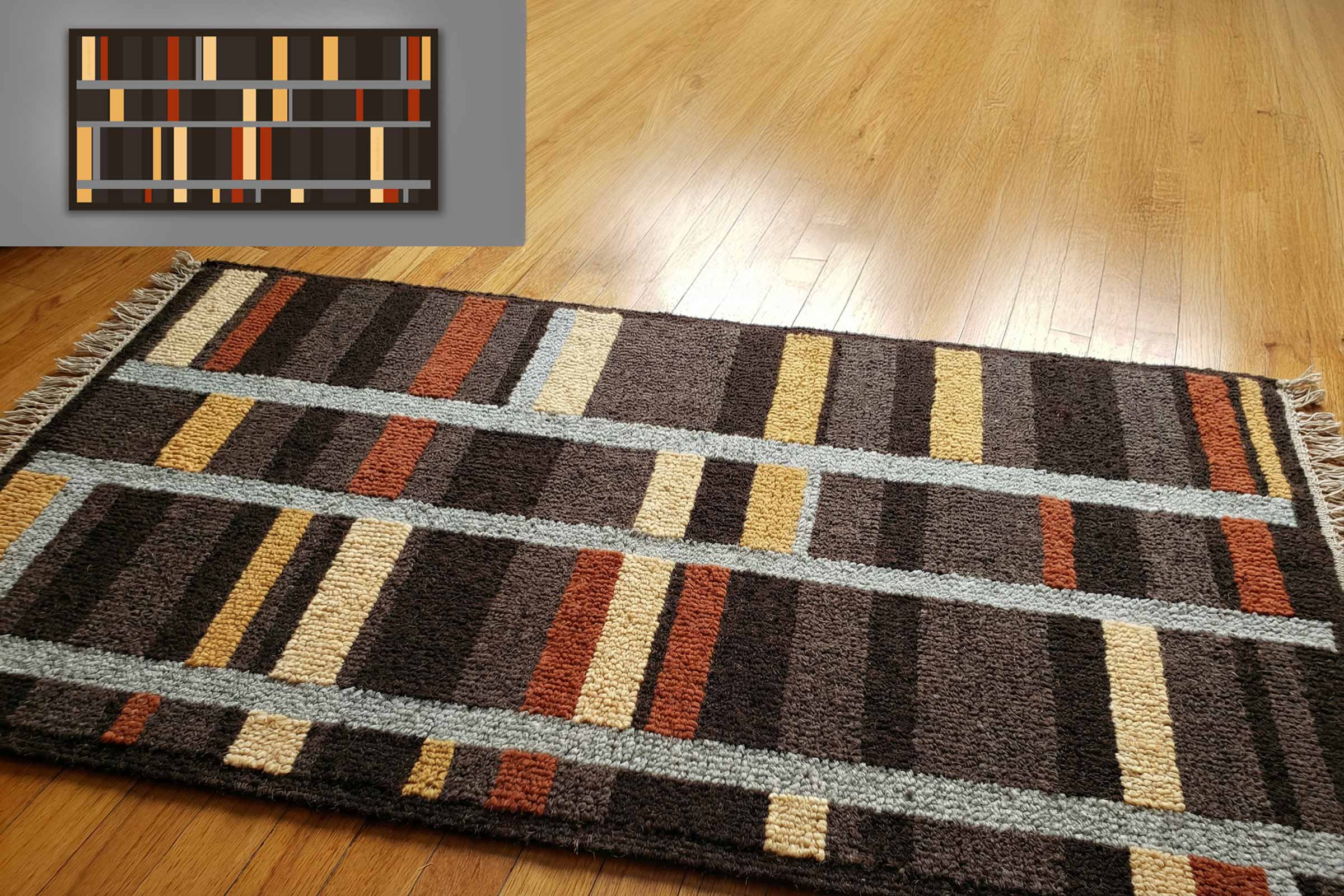
Yuxtaposiciones explores sustainability through material craft, environmental data, and social recognition.
Originally conceived for the exhibition “Tapetes—Anudando historias, enlazando ideas” at the Franz Mayer Museum in Mexico City and later commercialized through El Palacio de Hierro, the rug transforms its own production process into a visual and ethical statement.
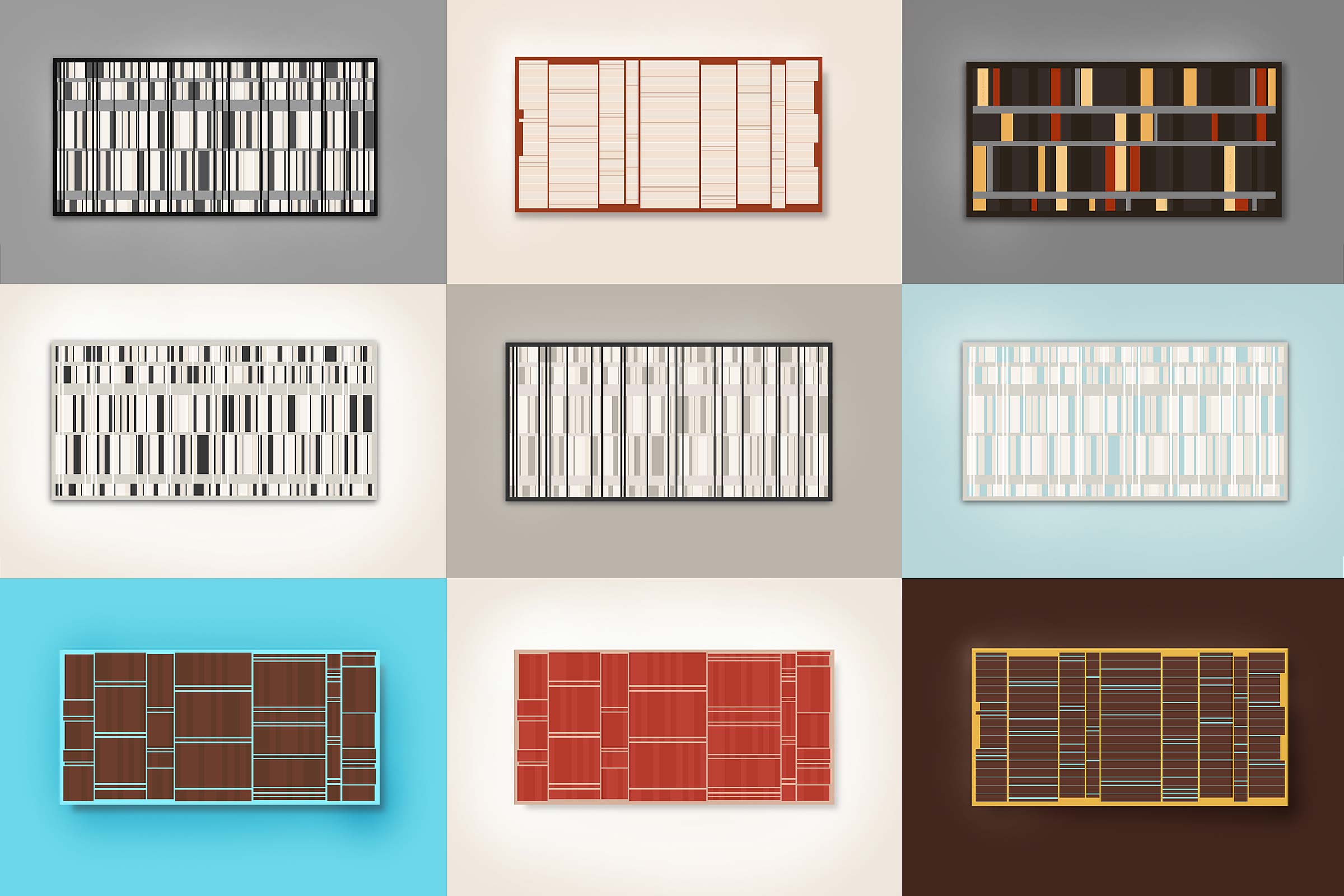
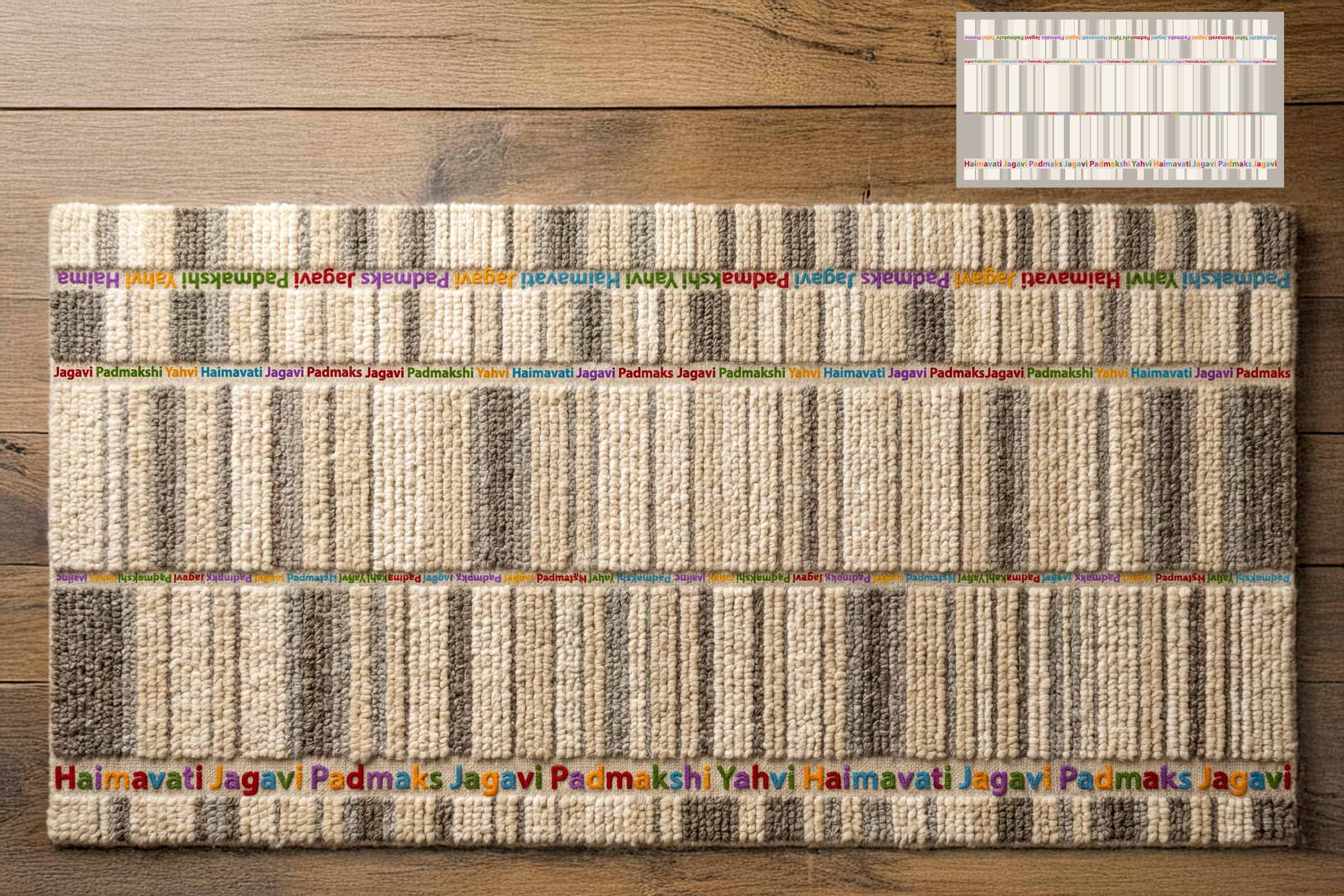
At first glance, the composition appears as a restrained monochromatic field interrupted by colored woven inscriptions. These inscriptions are the names of the artisans who participated in its fabrication—an intentional gesture to acknowledge authorship and give visibility to the weavers as integral contributors to the design.
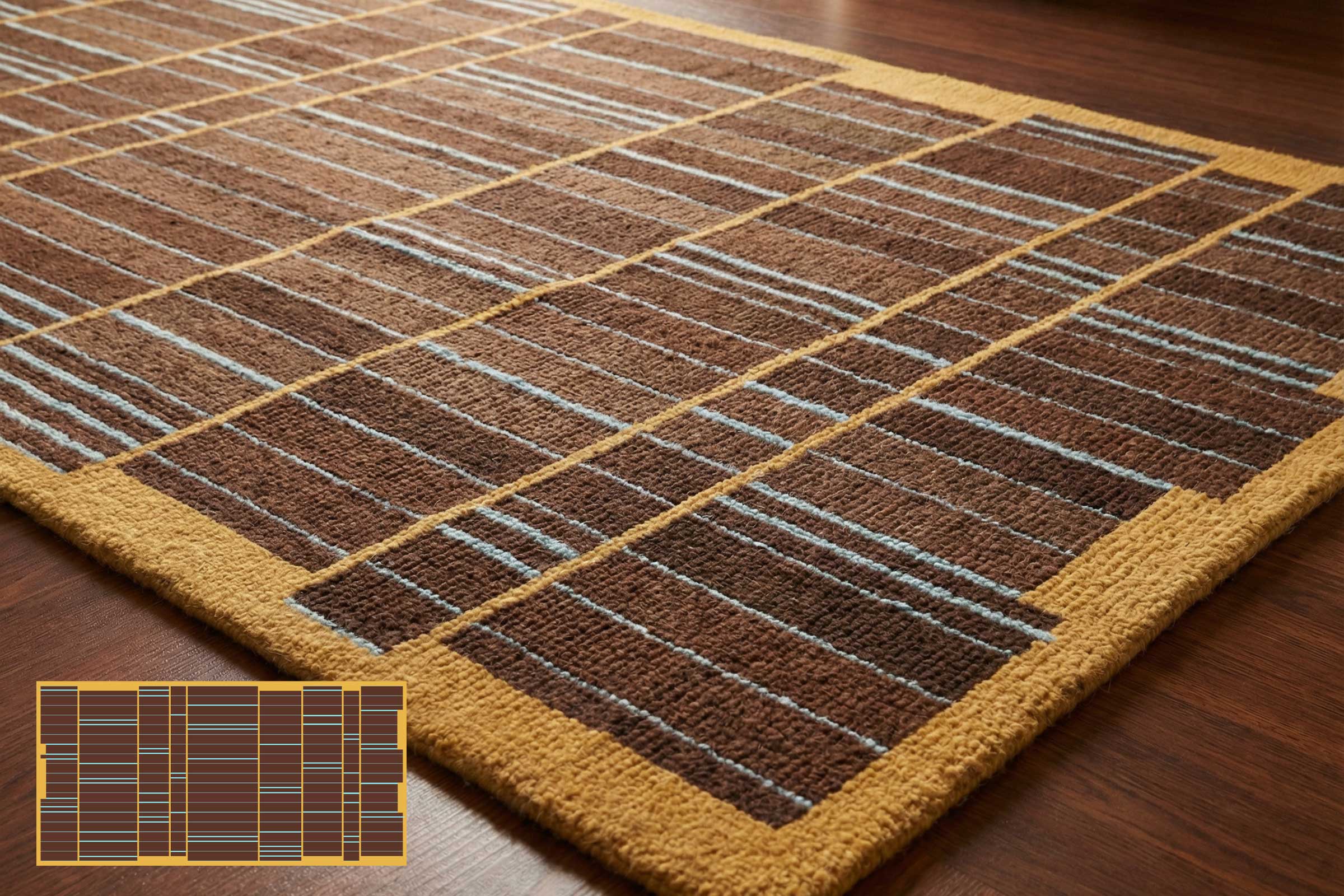
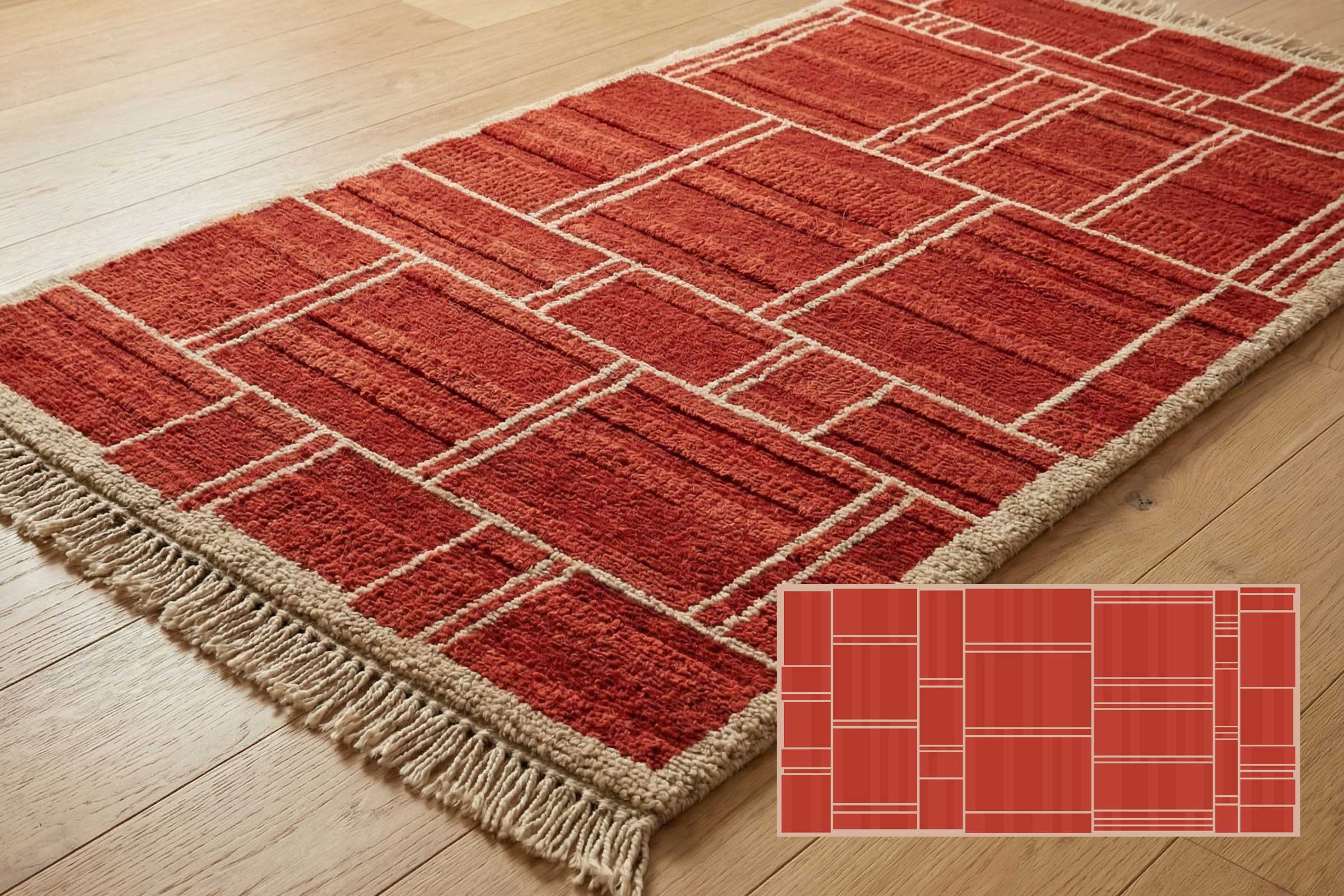
The pattern itself operates as a diagram. Each modular block represents a quantified percentage of CO₂ emissions generated throughout the production chain, turning the rug into a graphic explanation of its own environmental footprint.
Research revealed that the greatest CO₂ impact does not occur during transportation, dyeing, or weaving, but in the production of feed for the sheep supplying the wool. By incorporating leftover wool from previous Odabashian productions, the project reinforces a circular material strategy.
“Yuxtaposiciones” positions design as an intersection of environmental awareness, social acknowledgment, and formal rigor.
Design and Research:
Paul Cremoux W.
Rug Weaving and Materials:
Odabashian Rugs,
Exhibited at “El Palacio de Hierro” department Store.
Mexico City, MEXICO.